Sunday, July 22, 2012

Step 2 Studying Continued

A week out, and the nerves are setting in. I don't know what it is about these exams that make me go into respiratory alkalosis (get it? hyperventilation - decreased pCO2 - increased pH...hmm? hmm? Nerd humor...go figure). So hopefully I do well, and then I can upload my study schedule and tell you all what worked, what didn't...but for that I'll have to take the exam first, and get my score, so you'll have to hang tight for about a month or so. For now, lets review 5 things that I learned today:

  • Cosyntropin test is used to diagnose and differentiate between the different types of adrenal insufficiency. It involves administering about 250 mcg of cosyntropoin (which is an ACTH analog), and measuring cortisol & ACTH levels about 2-3 hours later. Normally, an individual should be able to make more than 20mcg/dL of cortisol. 
    • >20 mcg/dL of cortisol -- This rules out adrenal insufficiency 
    • < 20 mcg/dL of cortisol, >50 pg/dL of ACTH-- primary adrenal insufficiency (autoimmune/Tb/hemorrhage)
    • <20 mcg/dL of cortisol, <50pg/dL of ACTH--secondary or tertiary adrenal insufficiency (issue with the hypothalamus or pituitary gland)
  • Basal cell carcinoma rarely metastasizes! Yay!!!
  • For pyloric stenosis, surgery is the immediate treatment, however, make sure the patient (baby) is adequately hydrated and their electrolytes have been normalized. 
  • In an elderly patient complaining of progressive visual acuity decline (problems with vision while driving or at night), reporting distorted straight lines... THINK: macular degeneration. The macula is responsible for the fine acuity of what we see, and distorted straight lines is a clue that something is up. 
    • Bonus question: What do you see on ophtho exam? Drusen deposits in the macula
  • In a patient reporting a tick bite, with jaundice, hemoglobinuria, late petechial rash...THINK Babesiosis! 
    • Babesia is a parasite that is found in the northeast, and it has a tendency to enter one's red blood cells and cause hemolysis! This disease is pretty serious in the immunocompromised, asplenic and age>40 population. 
    • Treatment: quinine-clindamycin or atovaquone-azithromycin
There ya have it! Enjoy the night folks.

Thursday, July 12, 2012

Step 2 studying

Aah..how fast does time fly? This year has been flying by so quickly, and here I am now studying for step 2 already. It truly is a very different experience than step 1 studying (so glad that is over...), since our shelf-exams were basically preparation for this. Anywho, I just wanted to use this time to reinforce some factoids for boards so you and I can remember them! Here are FIVE things I learned from today's studying:

  • Mechanisms of Treatment Options for hyperkalemia (high potassium)
    • Calcium gluconate -- to stabilize cardiac cell membrane
    • Bicarbonate, Insulin, Glucose, beta-agonists--to push K+ intracellularly 
    • Kayexalate--to excrete K+ out of the body
  • Parkinsonian Tremor
    • Tremor seen in elderly at the initial phases of Parkinson's disease
    • Characterized as a 4-7 Hz resting tremor that goes away with fine motor movements like reaching for a pen, or writing
  • Pediatric Umbilical Hernias!!! 
    • These are due to defects in the abdominal wall, and usually spontaneously resolve by the time the child is 1 year old 
    • However, if the hernia is still present by age 3-4, enlarging over time, or has become symptomatic (strangulation, etc), the child should be referred for surgical correction
  • Somogyi effect
    • This is where a diabetic patient has increased fasting glucose levels despite appropriate treatments. 
    • Caused by hypoglycemia due to hefty/appropriate doses of insulin or other treatments in the middle of the night (3AM or so) which result in the body to respond with increased levels of epinephrine, norephinephrine and glucagon, which over-compensate for this hypoglycemia with increased glucose levels
  • MEN syndromes (i can NEVER keep these straight)
    • MEN I (3Ps) -- hyperParathyroidism, Pituitary tumor, Pancreatic tumors (gastrinoma, ZES)
    • MEN IIa -- Medullary thyroid cancer, pheochromocytoma, parathyroid adenoma/hyperparathyroidism
    • MEN IIb -- Medullary thyroid cancer, pheochromocytoma, mucocutaneous neuroma, marfanoid habitus
Well...these are the 5 things to learn today! I think I'll try and do this over the next few weeks to help keep things in the brain. Wish me luck for studying :)

Sunday, June 3, 2012

Exams Exams Exams!


Yes. This is quite accurate. Ha!

Thursday, May 31, 2012

Diabeetus

Yes, today we will be talking about Diabetes. Its probably the most common illness that I've seen all year long, so I thought I'd brush up on my knowledge, and try to explain in layman's terms to all of you. I tried my best to cover the pathophysiology, risks, symptoms, etc, but if you have any comments or questions, shoot me an email. 

Lets get started...
 
Diabetes is a disease in which the body cannot effectively control the levels of glucose, or sugar, in our body. Glucose is one of the primary sources of energy used by all the cells of our body, and therefore it is crucial that there is adequate control of glucose levels at all times.
There are two main hormones that are made by our body to control glucose levels. The pancreas secretes glucagon to increase glucose levels, and secretes, insulin, a hormone that helps glucose to enter cells of the body.  Normally, after a meal, the body senses the glucose levels in your bloodstream and the pancreas produces just enough insulin in response to ensure that the cells get the glucose. In diabetes, there is a defect in the way insulin controls glucose levels.
There are two types of diabetes, type I and type II. In type I Diabetes, the body makes very little or no insulin at all. However, in type II Diabetes, the body becomes resistant, or unresponsive, to the actions of insulin.  Therefore, in both types, glucose is not properly moving out of the bloodstream into the cells, and is building up in the blood and being excreted in the urine without functioning as fuel for our body. 

DM Type I: This is an autoimmune disease, in which the body’s immune system attacks and destroys the pancreatic cells that produce insulin. Therefore, the body produces very little or no natural insulin. This type of diabetes is generally seen in younger individuals as this disease is thought to develop in genetically susceptible individuals. Symptoms generally arise acutely and include, but are not limited to, increased urination and thirst, unintentional weight loss, fatigue and even blurred vision. It is crucial to recognize these symptoms quickly because life-threatening consequences of high blood glucose levels may develop quite rapidly.  

DM Type II: This form of diabetes is most common, and generally develops in people over the age of 40. The pancreas is fully functional and makes adequate amounts of insulin in this disease, however, the cells of the body become resistant to the effects of insulin. The cause of this resistance is unknown. At first, the body increases its production of insulin to overcome the resistance and control blood glucose levels so they remain at a normal range. However, over the years, the pancreas loses its ability make adequate amounts of insulin, and the glucose levels build up in the blood and are excreted into the urine without serving as fuel for the body. Symptoms will develop gradually over years, and include fatigue, frequent thirst and urination, blurred vision, frequent infections, and slow wound healing.  
 
Diagnosis:
 Fasting Glucose: If the level of blood sugar after not eating for at least 8 hours is above 126 mg/dL. If levels are between 110 and 125 mg/dL, the patient is known to have an impaired fasting glucose, meaning that they are at risk for developing diabetes and its complications in the future.
Glucose Tolerance: After a patient drinks a liquid containing 75 grams of glucose, and the blood sugar levels over the next two to three hours is above 200 mg/dL. If levels are between 141 and 199 mg/dL, the patient is known as having an impaired glucose tolerance, meaning that they at risk for developing diabetes and its complications in the future.

Risk Factors

Unfortunately, anyone can develop diabetes, however, certain risk factors put individuals at higher risk. These risk factors can include family history if diabetes, age (insulin production decreases with age), obesity and a sedentary lifestyle.

Symptoms

More commonly, the symptoms of diabetes include increased thirst, increased urination, fatigue, unintentional weight loss, excessive hunger. Sometimes, people experience problems with vision, itchy skin and even cuts or infections that take longer to resolve. If you are experiencing any of these symptoms, please call your doctor. People who have not received medical attention often present with complications such as heart attack, stroke, impotence, neuropathy, or retinopathy.

Complications

Hyperglycemia, or increased blood glucose levels, has detrimental effects on the blood vessels of the body and are a major source of morbidity and mortality in both type 1 and type 2 diabetes. Therefore, it is crucial to protect the body from hyperglycemic states. The harmful effects of chronic uncontrolled diabetes can be differentiated into macrovascular and microvascular complications. 
High glucose levels can lead to macrovascular complications by the process of accelerated atherosclerosis. Atherosclerosis refers to a condition in which fatty substances, such as cholesterol, build up in the walls of arterial blood vessels. The plaques in blood vessels reduce the blood supply to specific regions of the body and result in symptoms specific to the location of atherosclerotic plaques. The exact mechanism is unknown, however many studies have shown that diabetes results in increased direct injury to the walls of blood vessels, chronic inflammation, and increased propensity for blood clots. Atherosclerosis can manifest as:
  • Coronary artery disease: results from atherosclerosis of the blood vessels supplying the heart, resulting in decreased delivery of oxygen and nutrients. Growth of the occlusion can result in chest pain, and even heart attacks, which are often “silent” in diabetic patients.  
  • Peripheral vascular disease: results form atherosclerosis and narrowing of blood vessels that supply the legs and feet. Symptoms include pain, weakness, numbness, chronic, non-healing sores, wounds, and ulcers.
  • Cerebrovascular disease: damage to the blood vessels supplying the brain can result in a transient ischemic attack or stroke due to decreased supply to areas of the brain.

Microvascular complications result when there is damage to smaller blood vessels of the body, such as those supply the eye, kidney or peripheral nerves.
  • Diabetic retinopathy: damage to blood vessels supplying the retina of the eye, resulting in reversible blurry vision initially but can lead to reduced vision and potentially blindness.
  • Diabetic nephropathy: damage to capillaries supplying the functional units of the kidney, resulting in loss of (normally conserved) protein into urine. As the disease progresses, symptoms of swelling in eyes and legs, weight gain, anorexia and weakness occur. This can eventually progress to chronic kidney disease that will require dialysis.  
  • Diabetic neuropathy: injury to small blood vessels that supply nerves of the body. Symptoms may include numbness, tingling, altered sensations to a body part, urinary incontinence, erectile dysfunction, gastroparesis, diabetic foot ulcers, and specific symptoms to single affected nerves (eyes, hips, arm).
 

Treatment and Management

A chronic condition, there is no cure for diabetes mellitus, and therefore treatment and management focuses on controlling blood sugar levels, keeping them as close to normal values. Usually, a combination of diet, exercise and medications are used. The goals of treatment are to maintain a HbA1C level of 6.5%, but varies for each individual. In addition, preventative measures are taken to reduce the chronic complications of diabetes.

Lifestyle Modification: Patient education, exercise, weight loss, and a diabetic diet are all ways to effectively reduce glucose levels, but may need additional pharmacologic interventions.

Medications:
There are several groups of medications that can help one keep their diabetes under control and lead a healthy life. Your health care provider will prescribe medication(s) based on several factors: type of diabetes, severity of disease, age, and use (oral vs. injected). 

Oral Diabetic Medication

 People with type 2 diabetes are usually initially prescribed oral medications to lower blood glucose levels

  • Sulfonylureas
o       Includes: Glyburide, Glipizide, Glimepiride, Tolbutamide, Tolazamide, Acetohexamide, Chlorpropamide
o       How it works: Stimulates the pancreas to make more insulin
    • Side Effects: hypoglycemia, weight gain, bloating, GI upset, skin rash 
  • Metformin
o       How it works: Enhances body’s sensitivity to insulin
    • Side Effects: GI upset (diarrhea, nausea, abdominal pain), metallic taste
  • Acarbose
o       How it works: Slows down the absorption of glucose from food
    • Side Effects: GI upset (diarrhea, abdominal cramping, flatulence)
  • Thiazolidinediones
o       Includes: Rosiglitazone, Pioglitazone
o       How it works: Reduces body’s resistance to insulin
    • Side Effects: headache, low blood sugar, muscle aches, nausea, vomiting, stomach pain, swelling in legs and ankles

Injectable Medications

Insulin, a hormone naturally released by the pancreas, helps keep blood glucose in normal ranges by moving glucose out of the blood stream and into cells for energy. Exogenous insulin can be given to control glucose levels in diabetic patients.  These medications are used for type 1 diabetics who no longer produce sufficient amounts of insulin, or as a supplementary medication for type 2 diabetics whose blood glucose levels are no longer controlled by oral medications alone.
There are different types of insulin that work over different lengths of time. The dose and type of insulin is individualized for each person, and may have to be adjusted several times before a regular schedule is set up. The number and type of injections depends on diet, timings of meal, and exercise.
Types of Insulin
·       Rapid Acting Insulin (Lispro, Insulin aspart):
o       Begins to work within 5-20 minutes after injection
o        Effects last for 2-5 hours
·       Short Acting (Humulin R, Insulin R, Iletin I Regular, Novolin R, Velosulin Human):
o       Begins to work within 30-60 minutes after injection
o       Effects last 5-8 hours
·       Intermediate Acting (NPH, Lente):
o       Begins to work within 1-4 hours after injection
o       Effects last for 14-24 hours
·       Long Acting (ultralente):
o       Begins working within 3-6 hours after injection
o       Effects last for 18-36 hours.
·       Slow Released (Glargine)
o       Begins to work within 1-1.5 hours after injection
o      Effects last for 24 hours


Tuesday, March 27, 2012

Oh the things doctors say...

A few days ago, my attending asked one of my patients if his stools looked like eclairs or tim hortons' timbits.  This time...I did laugh, but only after the patient cracked up.

or...

Make sure to look down next time you take a dump, in case your doc asks you! Ha. Joking. Maybe.

Saturday, March 24, 2012

awkward OSCE examination

For those of you that are not familiar with the medical field, as medical students we have to take multiple OSCEs (objective structured clinical examinations...yes I googled this) to prove  the adequacy of communicative and clinical skills while working with standardized patients (or mannequins). In first year, we learn how to take a brief history of the presenting illness (HPI). At the time, it seemed so challenging to get all the required parts of the HPI from a patient in 10 minutes. But of course, it only got "harder" in second year, when we learned how to take a full history (which includes HPI, past medical history, past surgical history, allergies, medications, family history, social history and review of systems)....which we had to take in less than 15 minutes. Then came third year with its rotations, endless hours of rounds, presentations, lectures, question banks, etc. At the end of each rotation, we have to take an OSCE (specific for that rotation) and a shelf exam (multiple choice exam provided by NBME). The OSCEs are usually not that difficult, however it brings upon great anxiety because we have to interview/perform a set of clinical skills in front of a grader who is watching your every move (!!!), in addition to our standardized patients (who know everything you should [and should not] be doing). Sometimes, they're even video recorded and played for us afterwards...

Overall, its not a terrible experience. For the most part,  I've learned how anxious I still get right before exams, as well as the mistakes I make under pressure. However...I've also learned about how awkward and weird medical training can be. Today, I'd like to talk about my wonderful experience of my Ob/Gyn OSCE. This mainly consisted of 3 parts: history, differential diagnoses & treatment plan as well as the pelvic exam. By this point, I've learned to cruise through the history taking (that's pretty much all you do during third year). The awkward part is the physical exam. Let's examine the situation....

I knock and enter the room, hand the sticker with my name and student ID to the grader (who happens to be the attending I worked with during my GYN floor month). I then introduce myself to the patient...who happens to be a headless, chest-less, leg-less mannequin. Actually, I cannot even call it a mannequin, it is a piece of plastic in the shape of a pelvis.  I smile and introduce myself to the pelvis (aka the patient) and notify it/her that I will be performing a pelvic exam. I, then, get up to wash my hands and prepare the Pap smear kit.  As, I run the speculum under warm water, I begin to wonder if I should ask it/her about her weekend (I mean, if this was an actual patient, I most likely would not be silent at this part...I then decide not to ask...haha). I walk over to the pelvis and tell it/her exactly what I am about to do, in case you were wondering, she didn't ask any questions. I then place the speculum on to its/her non-existent thigh, asking if the temperature is okay, and continue despite no response. During the Pap smear, I tell it/her she will feel some pressure and to not worry because she/it may experience minor bleeding and pain afterwards. Throughout the exam, I continue to explain exactly what I'm doing, and ask her if she has any questions ....whilst trying to remain professional & not burst out into laughter when she/it doesn't respond. Luckily I got through the examination and passed, but I couldn't help myself from grinning and laughing outside the clinical skills center. 

As much as I appreciate and value our training, there are definitely situations like the one above, when I can't help but smile at how ridiculous some parts of our medical training are.  :)


Sunday, January 1, 2012

New Year!

Happy New Year to all!
At this time every year, without fail, there arises a new hope and inspiration to make this year better than the last. People make new resolutions, have new dreams and hope for a better tomorrow. Of course, I'm included in "people," and yes, I have made a list (a short one) of new resolutions I can only hope to keep for the whole year. No, I will not make them public, but I have written them out and kept them in a spot that I will be constantly reminded! One of the common themes that I've seen in the resolutions of many peeps is "being healthier." So simple, yet so DIFFICULT-being healthy could include working out more, or eating more veggies, or simply cutting down on eating out at restaurants. Well, in order to be a bit more healthy, why not start by understanding how the body works!  You've come to the right place folks (haha, I feel like I tricked you all into reading about health after all this talk about the new year).

Since I've just finished Ob/Gyn, I figured I should provide some basic information about women's health. Guys..sorry in advance-but read on to learn a bit more about your girlfriend/wife. Today, we'll talk about the menstrual cycle. Let's get started! I know many have learned this in health class or various other sources but its a bit more complicated than how it was first presented to me! So here goes...

PERIOD-is not the end, but the beginning!
In short, the menstrual cycle is a series of bodily events that occur in preparation for pregnancy every month starting at puberty. It usually is about 28 days long (the length varies for each woman), and involves several different organ systems. Scroll down to see the summary picture. The basic picture is that hormones released from parts of the brain (hypothalamus & pituitary) act as signals to control events occuring in the ovary -- which will also produce its own hormones that lay their effect on the lining of the uterus. Let's break it down day by day and get to know that happens in the body.

  • Days 1-5: Early Follicular/Menses-technically the start of the cycle, however its significance is that the last menstrual cycle has ended and pregnancy was not achieved. 
    • BRAIN: During menses, due to lack of fertilization, estrogen and progesterone levels are low, and lack of negative feedback causes the hypothalamus secretes GnRH (gonadotrophin releasing hormone) in pulses to stimulate the pituitary gland to release FSH (follicle stimulating hormone) and LH (luteinizing hormone). 
    • OVARY: FSH levels begin to rise and make their way to the ovary to stimulates and recruit "premature" follicles (aka primordial follicles).
      • LH doesn't have much of a role during the menstrual cycle because its secreted in tiny amounts-it'll be much more crucial later on. 
    • UTERUS:  the body "starts over" by shedding the lining of the uterus (endometrium) that is built up all month to provide a nurturing environment for the fetus. This too, is in response to the fall in hormonal levels [estrogen and progesterone-released by the remnant of ovarian follicle that the egg resides in ] that help sustain the endometrial lining. 
  • Days 6-10: Mid-Follicular/Proliferative phase. This phase is mostly characterized by the growth of follicles in the ovary. 
    • BRAIN: continued secretion of low levels of FSH from the pituitary. 
    • OVARY: When the ovary receives FSH signals, several follicles (immature eggs) begin to grow and mature (with a hope that one of them gets fertilized this time around), and ultimately one follicle is selected
      • As the follicle matures, one of its cells separates and becomes the egg, whereas the others form two layers - theca interna and externa. The theca interna begins to secrete estrogen. 
      • The estrogen released by the maturing follicle serves as a signal to the uterus-causing it to start the proliferation of the endometrial cells in preparation for conception.
      • The increase in estrogen relays back to the brain and had a negative feedback effect causing a decrease in serum FSH and LH levels. 
      • The increase in estrogen also causes proliferation of the glands in the endometrium of the uterus in preparation for conception. This can be seen in by the ultrasound as a "triple stripe" shown below: 
  • Days 11-15: Late Follicular/Proliferative phase: 
    • BRAIN: During this phase, LH becomes very crucial in the menstrual cycle. We see that FSH and LH are secreted at low levels still due to negative feedback from estrogen. 
    • OVARY: The dominant follicle is now selected and continues to grow whereas the other growing follicles stop and degenerate. The estrogen (from the maturing follicle) continues to increase - keeping the proliferation of the  endometrial lining going. Estrogen levels rise and peak one day prior to ovulation. 
    • UTERUS: The endometrial lining also gradually thickens and the cervical mucus becomes stringy (a test that can be used to monitor ovulation). 
  • Days 15-16: Ovulation: The release of the egg from the maturing follicle. 
    • BRAIN: As the estrogen peaks a day before ovulation, it results in a mid-cycle surge  of LH due to a switch in negative feedback control into a positive feedback of estrogen on LH receptors in the hypothalamus. 
    • OVARY: The sudden spike of LH causes the dominant follicle to undergo its first division of meiosis. The granulosa cells surrounding the oocyte in the follicle begin to luteinize just prior to its release and start releasing progesterone. Soon, the oocyte (egg) is released from the follicle and it is then free to travel down the fallopian tube into the uterine cavity. 
    • UTERUS: Progesterone concentrations increase and stops the proliferation of the glands. The triple stripe (shown below) is lost and the uterine lining becomes brighter and more uniform. 
  • Days 16-28: Luteal phase/Secretory phase
    • BRAIN: A gradual decrease in LH is seen soon after ovulation and taper off.
    • OVARY: estrogen and progesterone is continued to be secreted by the corpus luteum (remnant of the follicle) and rises up until the middle of this phase. 
      • IF NO FERTILIZATION OCCURS: Estrogen and progesterone production will eventually drop due to the regression of the corpus luteum in absence of a fertilized oocyte. 
      • IF FERTILIZATION DOES OCCUR: The fertilized egg begins to produce another hormone called human chorionic gonadotropin (hCG) that maintains the corpus luteum, and therefore estrogen and progesterone levels will remain elevated to support the pregnancy. 
    • UTERUS: The uterus lining is maintained up until the estrogen and progesterone start to decline if fertilization does not occur. When the levels become very low, the endometrium loses its blood supply and starts to shed, marking the onset of menses and the beginning of a new cycle. This occurs 14 days after the LH surge.
Phew...now that was a lot to learn!  Check out the figure below to make sense of what goes on: 
Picture courtesy of: Eurocytology
So now we have some basis of the monthly happenings in a woman's body. In upcoming blogs, we'll be talking about what can go wrong with the cycle! Hope this helped clear up any confusion! 
Until next time :)


Sunday, December 4, 2011

Gyn/Ob

Aaah...sweet sunday comes to an end. My extremely short weekend was filled with sleep, eating lots, studying and taking unnecessary naps in front of the fire place...not working on weekends has been great!
So I am 3/4 of the day done with my obstetrics and gynecology rotation, and as you all can see below...it has been a minute since I've written. Let's just say that I've been dazed over the past few weeks since I was on night shift for OB. I give mad props to people who have chosen night shifts because it takes so much out of you. Not only is your sleep cycle messed up, but your meals take a turn for the worse along with your entire routine. I guess if you're doing it for longer than 2 weeks, its ok; but man all I've done for the past two weeks is sleep through the day, wake up to shower and eat, go to work---and REPEAT.
But all is well since I have really enjoyed my OB rotation thus far--more than I had expected. For those that know me personally, know that as much as I like children...anything related to pregnancy freaks me out. From the growing belly, to the fact that this little alien is basically sucking the life out of you!!! However, my first experience delivering a baby was amazing. I was about 17 minutes into my first night on the service, when the intern flags me down and tells me to go get a surgical cap and booties on. We rush the mother into the OR for a stat Cesarean delivery. I get scrubbed in (nothing different from surgery or even gynecology) and stand next to the attending with the patient draped and ready to go. The intern makes the cut and the procedure begins just like any other surgery-cut through the skin, abdominal fat with short bursts of cautery to stop bleeding, and then through the fascia. We then get to the abdominal muscles and cut and pull those apart. At that point...everything was normal...I honestly didn't feel like any sort of delivery was even going on! I must have blinked for too long, because the next thing I knew, my hands was being taken into the abdomen and being placed on some soft, sort of rounded part of the body. Naturally, I figured it was the uterus, and the attending was trying to get me to pull it up and out of the body. WRONG! They had already made a slice into the uterus and my hands were holding the head of the baby. How did I figure this out?? Well when I was being yelled at to start pulling...haha. I managed to get the head out and slipped my hands under its tiny arms to pull the rest of its tiny body out. Ignoring the blood and fluids leaking out of this lady's body, I felt a lump in my throat and tears welling up in my eyes. I had just brought a new life onto this planet! I am and always will be the first person to touch this little child and bring him into the world. I look back now and think about how sappy yet magical that very moment was and I smile every time :)
As the baby was out, I kind of just looked around the room and people were running around trying to arrange for the next few minutes. I looked down and all I saw was this tiny human being crying, wiggling his hands and feet as we prepared to cut his umbilical cord. Snap..and he was now detached from his mother. The scrub nurse quickly handed him off to the circulating nurse who wiped him down and handed him off to the pediatricians. And like that...it was over. The procedure then ended up being pretty similar to the other surgeries. Close up the uterus, push it back in, allowing it to naturally place under the bowels. Close up muscle, fascia, and then a subcuticular to close up the skin.
So that was it...! My first delivery. The night continued with excitement...just as every night afterwards...with more vaginal and cesarean deliveries.
I was getting used to my schedule...but now starting days tomorrow..err..today! Lets see how that goes. Adios for now :)

Monday, October 17, 2011

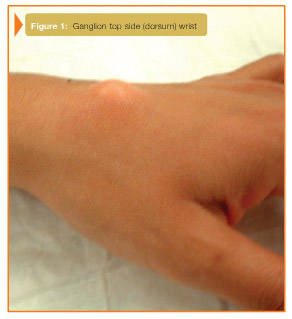
Ganglion cyst

My apologies for being MIA. As some of you may know, I got into a bit of a situation exactly one month ago involving a traumatic injury to my wrest. Unfortunately, that required me to take medical leave...so surgery was left in the middle. I'll be completing it later this year. BUT, I did get to see quite a bit of surgeries before I took time off. Because my injury is focused in the region of the hand and wrist, I'll be describing one of the surgeries I witnessed before taking leave: a ganglionectomy.

To start off, lets review some anatomy. See the pic below to avoid confusion. Starting off with the bones of the forearm: ulna (close to the pinky) and radius (on the side of the thumb). The bones of the hand are a bit difficult to remember, but I think of it as three different sections - the base being composed of the carpals, metacarpals make up the palm, and phalanges make up the fingers. Take a look at the pictures(http://www.graphicshunt.com/health/images/hand_bones-1318.htm) for a visual understanding. Now lets talk about the meat, haha, by that I mean muscles. Since they're a bit difficult to put out in words, lets just stick to the pictures. Lets move onto the topic of the day.


Ganglion cyst. What is that? Well...........here is the 411 on this medical condition.

What: fluid-filled swellings around the tendons and joints
Where: usually in hands and feet but can be located near any joint
Why (aka Cause): definitive cause is unknown, however studies suggest trauma to the joint or an anatomical anomaly in joint capsule or tendon sheath [creating a one-way valve that allows joint fluid out of joint but not back in] could be possible causes.
Symptoms: most cysts are raised, round lumps that can vary in size. Usually asymptomatic, hardly painful. However, the cysts can cause pressure on nearby nerves creating pain/weakness/numbness
Tests & Diagnosis: Physical exam, X-ray (to rule out other conditions), Aspiration (to confirm diagnosis by drawing out fluid in cyst), other Imaging tests (MRI, ultrasound for location, size, shape and depth)
Treatment: if ganglion cysts are painless, no further treatment is required. Its a watch and wait sorta thing. However, once the cyst becomes painful and starts interfering with one's daily activity, then can you think about some treatment options.
  • immobilize - to prevent further growth of the cyst and possible shrinkage. By limiting movement, pressure on nerves can be relieved.
  • aspirate - drain fluid from cyst with steroid injection following to prevent inflammation. With this treatment, the recurrence rate can be up to 60%
  • Surgery - Ganglionectomy - outpatient procedure involving the excision of ganglion cyst usually under local anesthetic, perhaps even general reserved for cases with chronic pain

Ganglionectomy - my experience:
Probably the quickest procedure I saw in the 20 or so days of surgery, we were literally in and out of the OR. I think scrubbing in took longer than the actual removal of the cyst.
Initially, the patient is given general, regional, or local anesthetic to relax muscles and fall asleep. In this case, it was the removal of a large ganglion cyst of the dorsal wrist, so the patient was given general. The procedure was done by a plastic surgeon who made the incision right through the center, complete length of the round cyst; just after palpating the borders. She then separated out the extensor tendons and found the ganglion cyst in close proximity to the radial nerve. The difficult portion was excising the base of the ganglion cyst which was almost attached to the radial nerve. It was key that we get the stalk of it, because the recurrence rates can be quite high. So, once the cyst was out we got to feel it! It felt like a squishy but somewhat firm ball of white goo. Afterwards, stitches were put in and patient was wheeled out. Quick, somewhat easy and simple. Here are a few pictures! Enjoy :)


Thursday, September 1, 2011

Surgery!?!!?!??!?!?!

So...as some of you know, I've started my surgery rotation, first month at Harper, next month at DRH. I've been interested in surgery for quite some time now, and took part in a 'clinical skills course' for surgery rotations and also interned at Henry Ford over the summer in their surgery program. However, nothing comes close to the wonderful [please note that italics in this case indicates sarcasm] experiences in the OR as a third year medical student. Not only are you waking up at such ridiculously early hours in the mornings, but you're at the lowest level of the totem pole. Actually, that's a lie...a third year medical student is not even a part of the totem pole. As a third year, you're squished below others on the totem pole to such an extent that no one wants you to be seen because you're a disgrace to all the activities you attempt to do in the OR.

Ok...so that was a bit dramatic...and exaggerated, haha. But jokes aside, surgery is sooooo different from neuro and psych. There's this unique essence that lingers in the hallways of the OR. It makes you feel stronger, smarter, and better than everyone else (aka non-surgical peeps). In my 3 (yes..only 3) days on this rotation, I've felt myself being utterly intimidated, yet at the same time, wanting to fit into the field.

I scrubbed into a right colon hemi-colectomy as well as a diagnostic lap + small bowel carcinomatosis resection. Um..so what does that mean you ask? Well we have each have a small intestine and a large intestine (also called colon). So the first procedure included the removal of the right (proximal) portions of the large intestine to rid the patient cancer that was localized to that area. We ended up taking a significant amount of the patient's large intestine out, all through only 3-4 tiny incisions into the abdomen. It truly was amazing to take part in such a huge surgery and only leaving behind minimal tracks. The second was similar, but it was localized metastatic cancer of the small bowel. Metastasis is the diffuse spreading of a cancer from one localized area to all over the body. For example, lung cancer can metastasize to the bowel, or the bladder, or the brain. As you can imagine, metastasis is very complex and ultimately is one of the final stages of many cancers. I'd like to encourage everyone (over the age of 50 or earlier if you have family history of colon cancer) to PLEASEEEEE get a colonoscopy every year. Cancer is truly a devastating disease, but the earlier it is detected, the better chance of recovery!

Sorry for the very short and not super descriptive post. My eyes are literally shutting as I type. Yes I know its 9:45 pm, but I have to wake up in 5 hours. BAHHHH.

Oh also, I got to close up a patient today!!! Aka, sutures and everything! More about that later!

Sunday, August 21, 2011

Some odd disorders...Part Uno

  • Trichotillomania: This falls under the category of impulsive disorders and is characterized by compulsive pulling of hair from one's own body [typically the head, sometimes eyebrows/facial hair/other body hair] that leads to visible hair loss, and could potentially lead to social or functional impairments. The compulsions are worse in times of stress or depressed states.
  • Koro: an overwhelming belief that one's external genital (males) or secondary sex organs (nipples in females) is shrinking, retracting and will eventually disappear. Some even believe that this will end up causing his/her death. This disorder is prevalent in Eastern Asia.
  • Hallucinogen Persisting Perception disorder: visual hallucinations or flashbacks of the experiences felt during earlier use of hallucinogens in life. This is thought to be a result of reabsorption of the hallucinogen years after last use from lipid stores.
  • Dissociative Fugue: sudden, unexpected travel away from home along with the inability to recall parts of one's actual identity and past. This will cause the person to assume a new identity and occupation after reaching this new destination. This disorder usually is seen after a stressful life event.
As I was reading my first aid...I came across these and thought they were the weirdest of them all. Initially I was quite skeptical, thinking that people are just pretending/feigning these symptoms for primary or secondary gain...but after a bit of research, these are actual disorders characterized by the DSM Manual for Mental Disorders. There are a few more I thought were pretty intersting... will tell you more about them later.


Winnie the Pooh - mental illnesses?!?!

Couldn't help but post this (hehehehe):

courtesy of: http://www.g33kpron.com/wp-content/uploads/2011/08/winnie-the-pooh-drugs.jpeg

Wednesday, August 10, 2011

Dealing with psychotic patients

Two weeks into the psychiatric inpatient service I have been exposed to plenty of psychotic patients. This experience however took the words 'mental' to a whole new level.

A little nervous, and very scared, I slowly made my way to the front desk to announce the name of the patient. "Mr. X, will you please come up to the front desk." His back stooped, Mr. X shows up a few seconds later as I studied his disheveled hair and food stains on his shirt, taking note of his appearance, movement and affect. We make our way to the alcove and I sit down across from his chair. Never had I felt so uncomfortable. But as soon as I received the answer to my first question, all my anxiety and fear drifted away.

"So what brings you in Mr. X," I asked. "Well, I haven't really been sleeping well. You see, ever since my birth, I've had this power given to me to take on the world's problems and make sure that I help people everyday, and not just people from this planet, but the planet I hail from as well as other universes too." Clearly, I would not be doing most of the talking. It didn't stop there. I quickly learned that my patient had been brought to this planet in a spaceship by his real parents to save this earth from all evils in 30,000 B.C., since then he has been carrying the troubles of mankind on his shoulders as he tries to rescue good from bad. His own children had become victims of the devil. Mr. X would hear voices of Jesus Christ telling him to act well and give him power. He had a girlfriend, one from another planet, that came to him to borrow money since he had the ability to create money from nothing. He could speak 26 different languages, his Russian was along the lines of "ahoo hee haa haaa hooo heee haaaa." All this and much more was found out in the first 2 minutes of the interview. This, my friends, is called pressured speech with tangential thoughts. You think you're talkative? Wait till you talk to someone with pressured speech, just get them started on a topic and you can sit there for the next hour waiting to interrupt.

What seemed like minutes, turned into an hour and then more. I began to make sense of the terms that I had read in psychiatry under the schizophrenia section. Schizophrenia falls under psychotic disorders. What is psychosis? Medically, it is defined as a disruption in the perception of reality-and symptoms include: delusions, hallucinations, or disorganized thought. Listed below are brief explanations of each of these symptoms:
  • Delusions: illogical beliefs that are held despite evidence of being fake & are inconsistent to a person's background/culture
  • Hallucinations: sensory perceptions in the absence of any sort of stimulus
  • Disorganized thoughts: thoughts that are disorganized...duh. haha just joking; this will include illogical answers to questions, thought derailment, tangentiality, etc.
So in my patient, he had several bizarre delusions: one of which was that he came from another planet, he was saving the world, his children were victims of the devil. His hallucinations were auditory commands since he claimed to be hearing the voice of Jesus Christ. In addition, his thoughts were disorganized, he constantly jumped from one topic to another (tangentiality) and never really finished his thoughts. This patient also presented grandiosity (unrealistic sense of superiority)--he was able to make money, he spoke 26 languages, etc.

All in all, psych has surprisingly turned out to be very helpful, and I'm so glad to have had this experience. A major lesson I learned, and want to emphasize here, is the importance of one's childhood and the drastic impact it has on the rest of your life. Many of the patients admitted into our service, whether its for depression, psychosis, or bipolar disorder, a recurring theme I've noticed is the lack of stability in their childhood years. This includes anything from having abusive people in one's life [physical or sexual] to not seeing one's parents often because they're always working. One of the docs explained how children that were not held and cradled in the first three months of life are more likely to develop psychiatric problems later down the road...
[reference to be found still...]. So, to all the parents out there, take some time out for your kid, play ball, or even just a daily hug can go so far.

Enough for tonight. Will update on more stuff I see super soon...

Tuesday, August 2, 2011

past two years...

Take a look at most* (not all) of the notes from the past two years. If combined, they are 44" tall. WHAT?! Thousands of pages crammed into the tiny neurons of my brain...maybe.

Starting a new life...ROTATIONS!


So, you can only imagine how busy second year was judging by the number of posts that I have written..haha. That is about to change! Update in life...I PASSED BOARDSSSSSSSSSS (and am very satisfied with my score), and I've recently started my third year rotations and am loving every (...most) moment of it. I just finished my Neurology rotation, and just started my Psychiatry rotation today. Since I'm a month behind on my documenting, I'm going to try and do a bit of psych and neuro in each post.

I'll start off with my first day at psych since its fresh in my head. I'm currently on inpatient and got to see some super crazy (pun intended hehe) stuff today. But more important than that were the lessons I learned. I'll describe two, of many more to come, real briefly.
First was on countertransference. So what is it, you ask? Medically, its having a preconceived judgement of how a patient is going to act based on people or experiences that you are reminded of while interacting with that patient. For example, Billy bob a new patient that I met with today reminded me of Jackie, a noncompliant patient from years ago, and so my behavior towards Billy bob will be change and I assume that Billy bob will also be noncompliant without actual evidence from Billy bob himself. Believe it or not, countertransference is actually very common in doctors. My attending today emphasized heavily that the act of countertransference is not bad, however, it can easily crossover and become harmful if it goes unrecognized and starts getting in the way of doing your job.

The second lesson I learned was not really a lesson; it was more of an analogy: revenge and forgiveness. Revenge is like going to McDonalds and eating a huge meal that satisfies you only for a few hours. Forgiveness is like eating balanced and healthy meal throughout the day, that will keep you full and satisfied for years to come. Random? Yes, but lets just say it was medically related in that it involved the topic of physical abuse.

Enough of my psych lessons of the day. Lets talk Neurology! First and foremost...I MISS IT SOOO MUCCCHHHHH! I cannot get over how fortunate I was to have started off with such a wonderful rotation with wonderful residents and attendings. I went in with alot of interest because I have loved neurology since undergrad. The nervous system is such a vital part of your body and the fact that it controls every single thing that we do [from blinking to biking] just amazes me!

So, I want to briefly touch on a research topics that I had to look up and present on: Cortical spreading depression. Yeah, I hadn't heard of it either. Its defined as a self-propagating wave of depolarization (activation) of brain cells (neurons and glia) that spreads from the back of our brains (occipital region) towards the cerebral cortices. So...it doesnt seem that bad, right? WRONG. It is actually thought to play an important role in pain and auras of migraines. Pain is a result of the depolarization activating trigeminovascular neurons which in turn induces nociceptors (pain receptors) in the overlying meninges (coverings of our brain). In addition, auras are also thought to be related to cortical spreading depression.

For further information, check out: http://www.springerlink.com/content/q2882h12343u37q8/

That's all folks!


Wednesday, August 25, 2010

U.S. a third world country?

Wow. Throughout my life as a student, I've always heard other foreign countries referred to as 3rd world...Is America one of them? Check out the link below...

http://shiitushouldkno.blogspot.com/2010/08/10-signs-that-us-is-becoming-third.html

Never expected to hear the United States and 3rd world country in one sentence...